-67%Featured

Original price was: ₹1,500.00.₹500.00Current price is: ₹500.00.
Yellow Tape
50 in stock


Original price was: ₹1,500.00.₹500.00Current price is: ₹500.00.
50 in stock
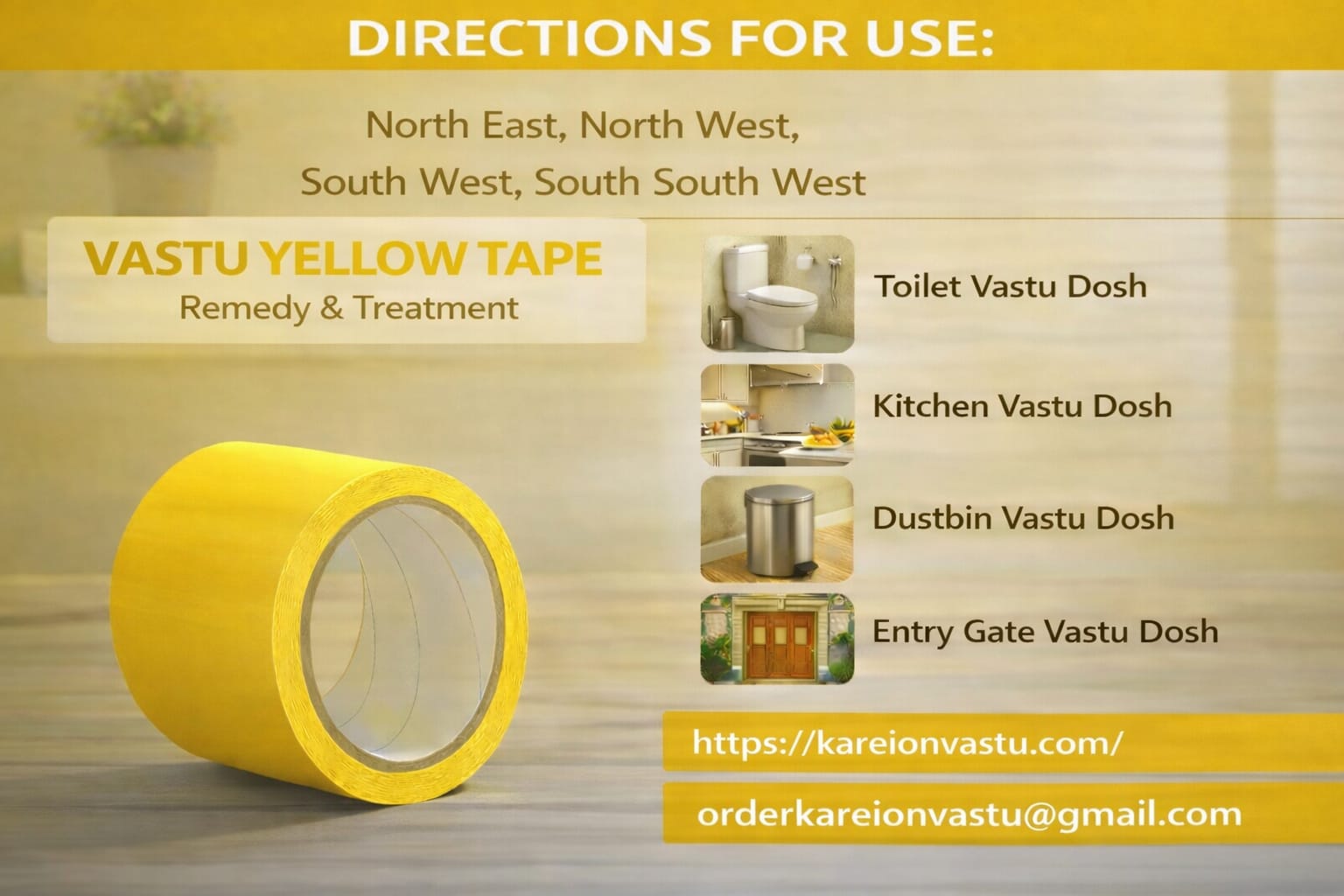
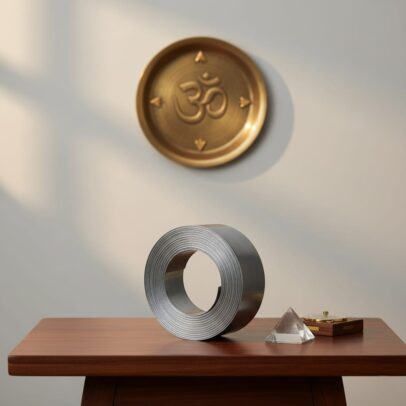
In Vastu Shastra, Yellow Vastu Tape is a powerful “remedy of the five elements” (Panch Tattva). It is a non-invasive tool used to correct architectural defects (doshas) without the need for demolition or reconstruction. The color yellow represents the Earth Element (Prithvi), which symbolizes stability, grounding, and support.
Material: Usually made of high-quality, waterproof vinyl with a strong adhesive to withstand floor cleaning and moisture.
Color Significance: Yellow is used to balance the “Earth” element. It acts as an energetic “insulator” or “coupler” depending on where it is placed.
Elemental Strip Technique: This is a specific MahaVastu method where color strips are applied to the floor or skirting to “block” or “neutralize” the negative effects of a wrongly placed activity.
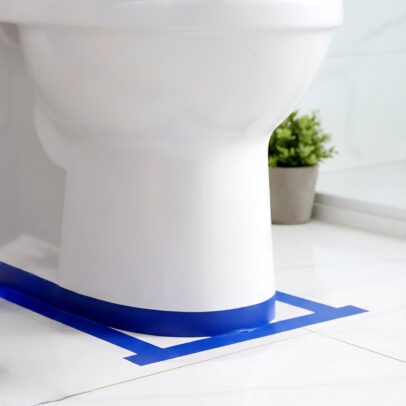
Toilet Correction: This is the most common use. If a toilet is located in the South-West (SW) or South-South-West (SSW) zones, it can drain away stability and savings. Yellow tape is applied on the floor around the toilet seat (on three or four sides) to “seal” that negative energy and prevent it from affecting the rest of the house.
Entrance Blocking: If the main entrance is in an unfavorable location within the South-West zone, yellow tape is applied across the floor at the threshold of the door to neutralize the harmful effects.
Zone Balancing: It is used to strengthen the Earth element in areas where it is weak. This helps in bringing stability to relationships and career.
Space Surgery: Consultants use it to “cut” or “extend” zones in a floor plan to fix irregular shapes or extended corners.
| Target Zone | Purpose |
| South-West (SW) | The primary zone for yellow tape. It governs stability, relationships, and skills. |
| South-South-West (SSW) | The zone of disposal. Used here to treat toilets or dustbins. |
| Floor / Skirting | Applied along the floor-to-wall joint (skirting) or directly on the floor tiles. |
Surface Prep: The floor must be completely dry and free of dust or oil, or the tape will peel off quickly.
Measurement: Most tapes are 3 to 4 inches wide. Ensure the strip is clearly visible and not hidden under a mat for the best symbolic effect.
No Worship: Unlike a Yantra, the tape is a functional tool. You do not need to perform a puja for it, but you should replace it if it gets torn or starts peeling.
| Weight | 0.130 kg |
|---|---|
| Dimensions | 4 × 4 × 4 cm |
| Dimensions | 9.5cm, 9.2cm, 9.5cm. |
| Weight | 190 to 200g |









Reviews
There are no reviews yet.