The 5 Mukhi Rudraksha (Panchmukhi) is the most abundant and widely used variety of Rudraksha, accounting for nearly 90% of the total production. It is considered a “universal bead” that is safe and beneficial for almost everyone.
Significance and Symbolism
-
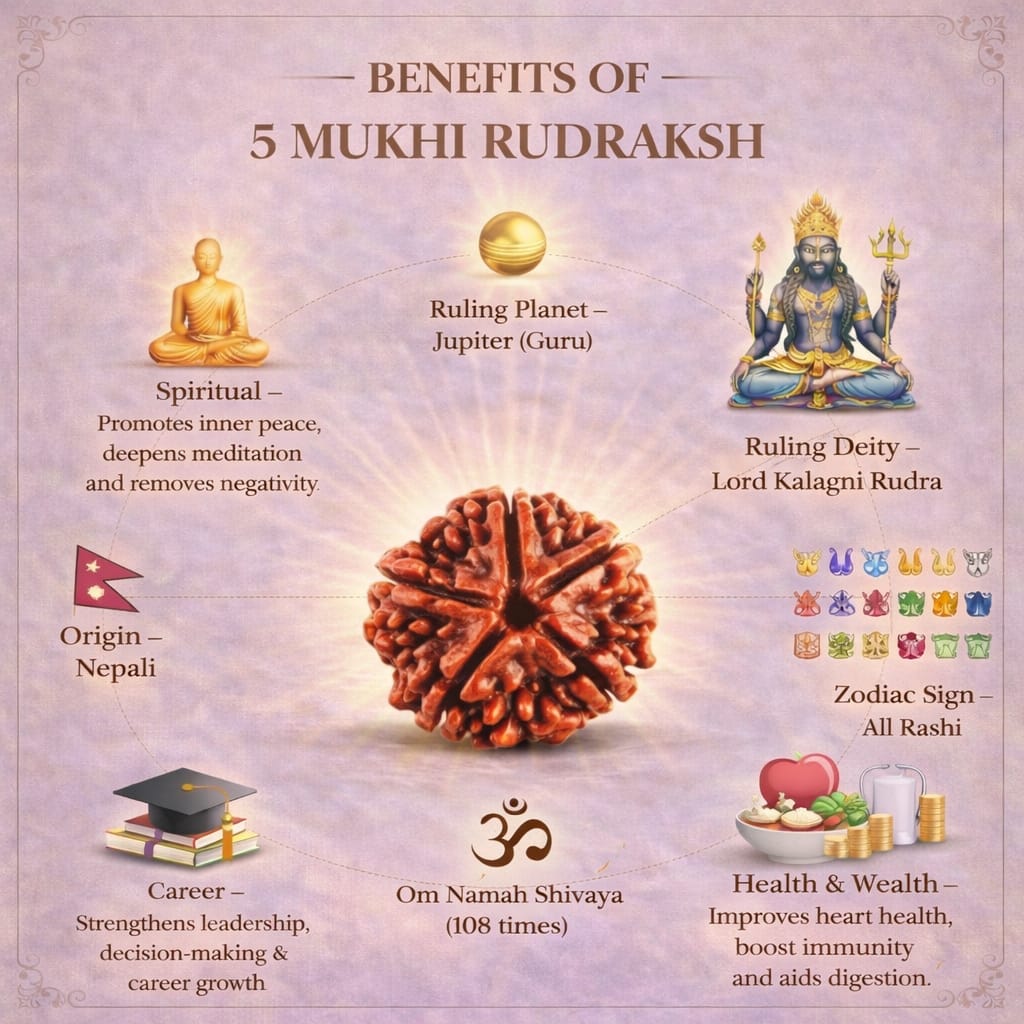
Presiding Deity: Lord Kalagni Rudra, a powerful form of Lord Shiva.
-
Ruling Planet: Jupiter (Brihaspati). This planet represents wisdom, prosperity, and spiritual growth.
-
Elements: It symbolizes the five elements: Earth, Water, Fire, Air, and Sky.
-
Main Mantra: Om Hreem Namah (ॐ ह्रीं नमः).
Key Benefits
The 5 Mukhi is primarily known for providing peace, health, and spiritual alignment.
-
Physical Health: It is highly regarded for its ability to regulate blood pressure and support cardiovascular health. Many traditional practitioners suggest drinking water in which a 5 Mukhi bead has been soaked overnight (in a clean glass or copper vessel).
-
Mental Peace: It acts as a natural stress-buster, helping to reduce anxiety, manage anger, and calm a restless mind.
-
Spiritual Growth: It is the standard bead used in a Mala (108+1 beads) for meditation and Japa (mantra chanting). It helps the wearer connect with their inner self and removes negative traits like greed, lust, and ego.
-
Protection: It is said to create a “cocoon of energy” around the wearer, protecting them from negative vibes and untimely death.
Who Should Wear It?
Because its energy is gentle and balanced, there are very few restrictions:
-
Beginners: It is the best bead to start with if you have never worn a Rudraksha before.
-
Students & Academics: It helps improve focus, memory, and intellectual capacity.
-
Those with High BP: It is often worn as a Kantha (large beads near the chest) to help stabilize the heart rhythm.
-
Jupiter Remedies: It is recommended for people with a weak Jupiter in their birth chart to improve luck and wisdom.
How to Identify an Original 5 Mukhi
-
Five Lines: Ensure there are five distinct vertical lines running from the top to the bottom.
-
Natural Surface: The texture should be woody and rough (like a walnut). Avoid beads that look too smooth, polished, or painted.
-
Origin:
-
Nepal: Larger, with very deep and clear grooves. Generally considered more powerful.
-
Indonesia/Java: Smaller and smoother. These are comfortable for making long malas for daily wear.
-
The Sink Test: A genuine, heavy, and ripe bead will usually sink in water. However, an X-ray test remains the only 100% conclusive way to see the five internal seed chambers.


Reviews
There are no reviews yet.