-17%Featured
Original price was: ₹12,000.00.₹10,000.00Current price is: ₹10,000.00.
Sphatik Shivling
35 in stock

Original price was: ₹12,000.00.₹10,000.00Current price is: ₹10,000.00.
35 in stock
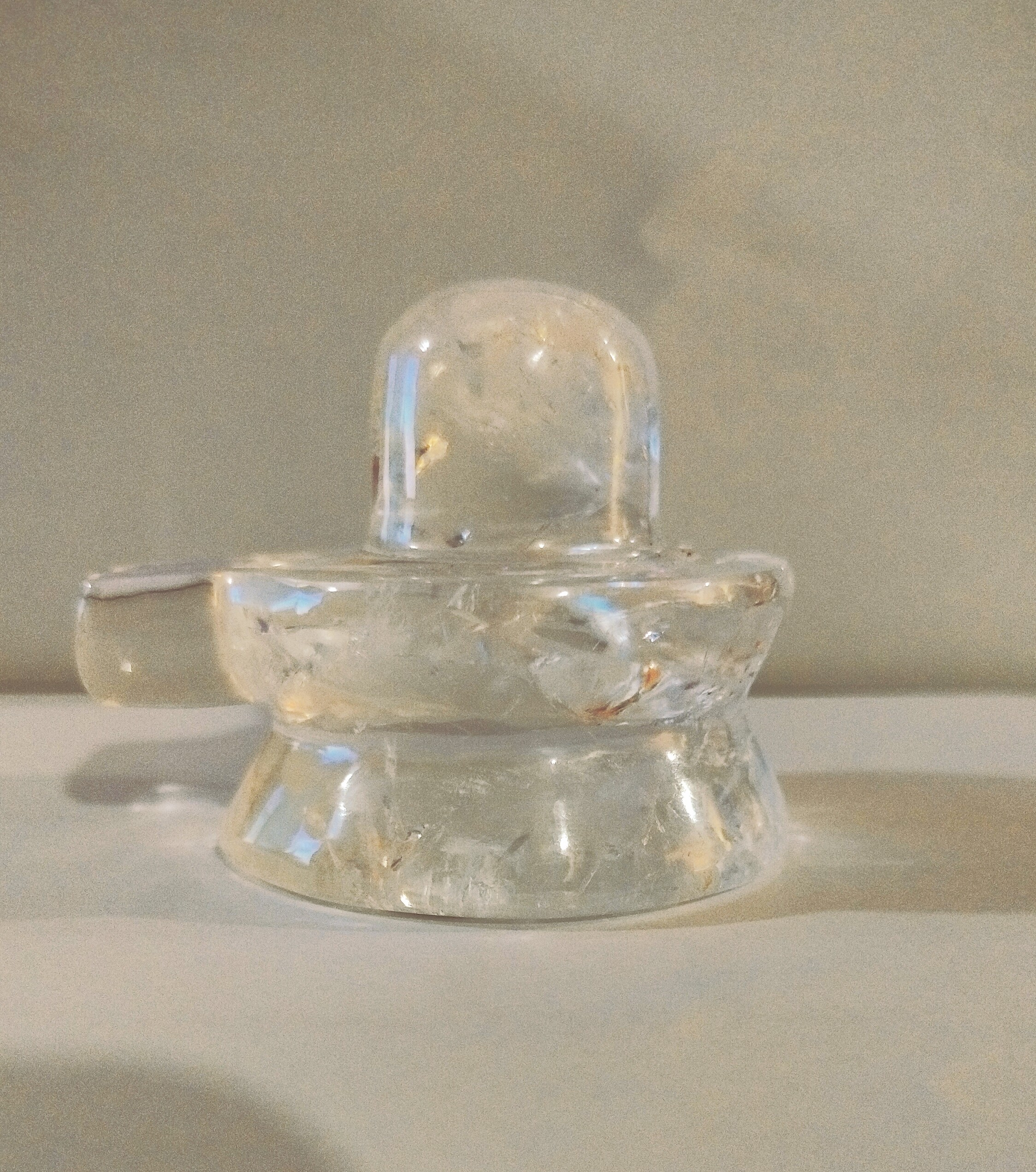
A Sphatik Shivling is a sacred representation of Lord Shiva carved from natural Clear Quartz (known as Sphatik in Sanskrit). In Vastu and Vedic traditions, it is considered one of the most auspicious and purest forms of the Shivling for home worship.
Material: Made from 100% natural transparent quartz crystal. Sphatik is known as a “Master Healer” gemstone because of its high-frequency vibrations and ability to amplify energy.
Symbolism: It represents the Nirguna Brahman—the formless, attribute-less, and omnipresent nature of the Divine. Because the crystal is transparent, it symbolizes absolute purity and clarity.
Uniqueness: Unlike many other idols, a genuine Sphatik Shivling is often said to be inherently pure and may not strictly require the Pran Pratishta (consecration) ritual, as the gemstone itself is considered “self-energized.”
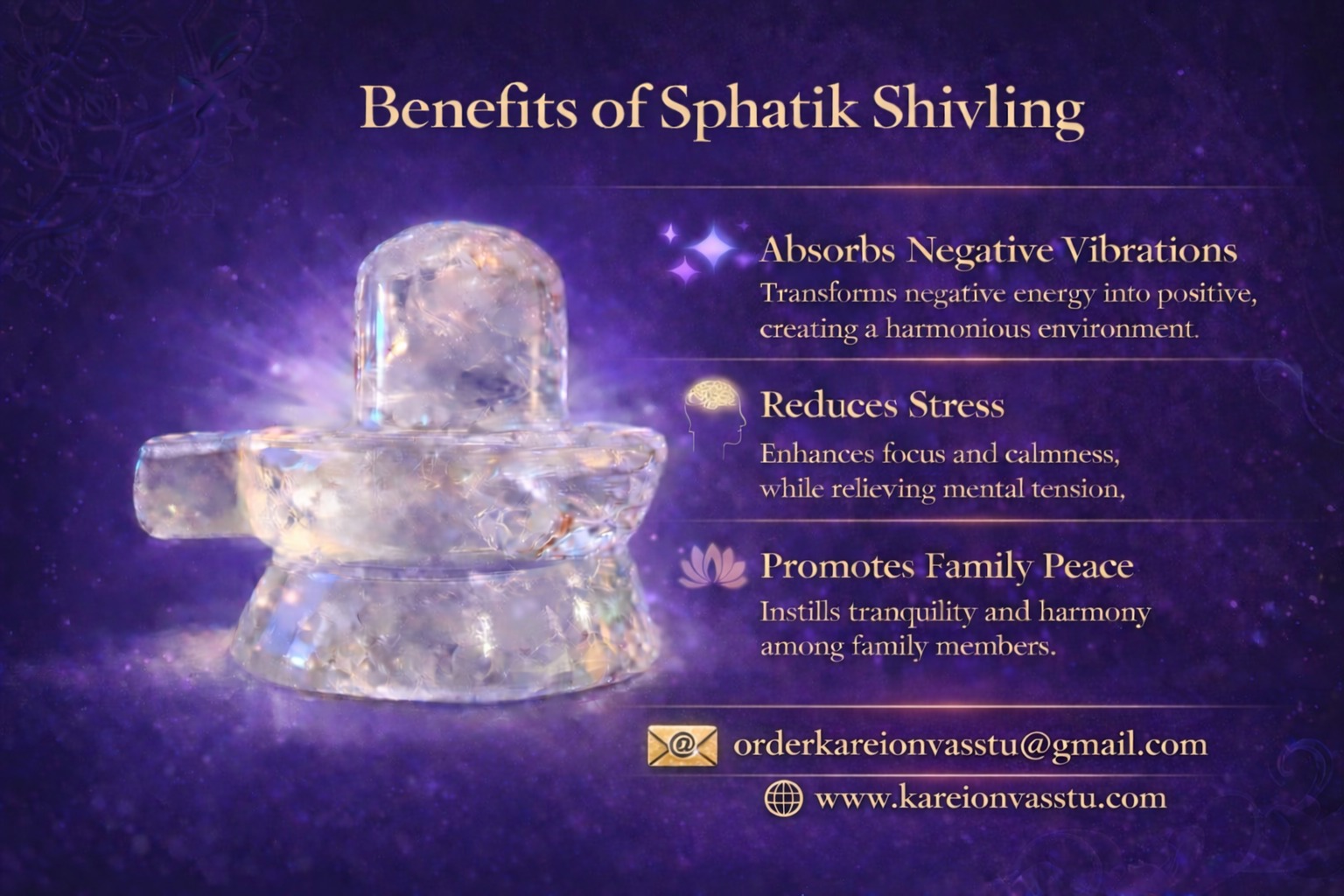
Energy Amplification: It acts as a “supercharger” for its surroundings, absorbing negative vibrations and radiating positive energy throughout the home.
Mental Clarity: Worshipping or meditating before a Sphatik Shivling is believed to enhance concentration, reduce stress, and bring a deep sense of inner peace.
Harmonious Environment: It is used as a Vastu remedy to resolve disputes among family members and foster a peaceful atmosphere.
Spiritual Merit: According to ancient scriptures, worshipping a Sphatik Shivling at home is considered equivalent to offering prayers at the sacred Jyotirlingas.
According to Vastu principles, the placement of the Shivling is crucial for attracting the right energy:
Direction: The most auspicious location is the Northeast corner (Ishan Kona) of the house or puja room.
Facing: The Yoni base (the circular base) should face the North.
User Orientation: While performing prayers, the devotee should ideally face East.
Surface: It should never be placed directly on the floor; instead, keep it on a clean, elevated platform made of copper, brass, or wood.
Abhishekam: It is common to perform a ritual bath using water, raw milk, or Panchamrit (a mix of milk, curd, honey, ghee, and sugar).
Offerings: Offerings of sandalwood paste (Chandan), white flowers, and Bel Patra (Bilva leaves) are highly recommended.
Mantra: Chanting the “Om Namah Shivaya” mantra 108 times during the ritual is believed to energize the space.
Cleaning: After the ritual, the crystal should be gently wiped with a soft, clean cloth to maintain its transparency and shine.
| Dimensions | 5cm, 6.5cm, 4.5cm. |
|---|---|
| Weight | 170 to 172g |








Reviews
There are no reviews yet.